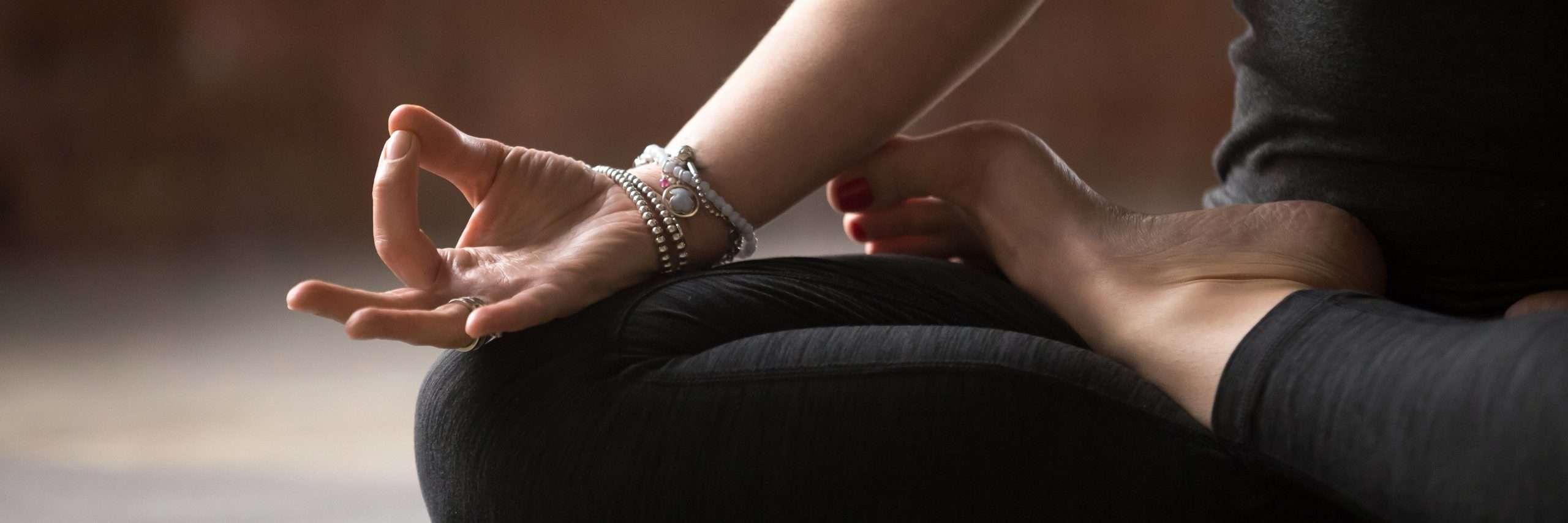



“Meditation is the way of simplicity. We are not thinking about anything. We are not imagining anything. We are not remembering anything. We are just being. We are not reflecting about God or thinking about God or talking to God. We are just being with God.”
— John Main, The Way of Unknowing: Expanding Spiritual Horizons Through Meditation (1980)
John Main was a Benedictine monk who quietly revolutionized Christian spirituality by reintroducing contemplative meditation to the West. Through what became The World Community for Christian Meditation, his teachings spread globally as a discipline accessible to all traditions.
Although I consider myself agnostic, Main’s emphasis on direct experience rather than doctrine drew me in. WCCM meditation circles became part of my recovery journey — a way to practice open-mindedness by being willing to try something new. What I discovered was a teaching that addressed something universal: the exhaustion of living in our heads.
Most of us live suspended between past and future, rarely meeting life as it is. We rehearse grievances, predict disasters, defend our story. Step Eleven speaks of seeking “conscious contact” with a Power greater than ourselves, but how can we connect when we’re lost in mental commentary? Main’s answer was simple: stop thinking about God. Just be with God — or in secular terms, just be.
But what does “just be” actually mean? At the heart of Main’s teaching was silence — not as emptiness, but as presence. He believed silence was the universal language beneath all thought, where commentary dissolves and awareness becomes whole. Mindfulness is the moment we stop analyzing and start experiencing. Stillness is not withdrawal. It’s an active return to what is actually here.
Main taught a concrete practice: sit still, close your eyes, silently repeat a mantra. He used Maranatha, an ancient Aramaic word meaning “Come, Lord.” But the mantra is a tool, not theology. A discipline of letting go, like focusing on the breath. It humbles the mind and releases control.
Main insisted this wasn’t just technique. The key was regularity. Twenty minutes, twice daily. This consistency created what Main called “poverty of spirit” — not depletion, but spaciousness. An inner emptiness that finally has room for something larger than our own noise. This is Step Eleven’s daily discipline: using thoughtful contemplation and meditation to deepen our awareness and availability to life as it unfolds.
And this practice, Main warned, demands something of us. He described meditation as “dying to self” — quieting the ego that clings to its story. Each time we let a thought go, we release our grip on illusion and awaken to a wider life. This is humility: not thinking less of ourselves, but thinking of ourselves less. We cannot think our way into right living. We must live our way into right thinking.
Step Eleven isn’t about escaping the world; it’s about awakening within it. Meditation creates the space where we can finally hear something other than our own voice — where conscious contact becomes possible.
And what becomes possible is presence itself. God, Spirit, Truth, the Universe, Reality, Life itself — whatever name we use — isn’t somewhere else waiting to be found. It’s right here, in the pause between thoughts, in the breath that keeps us alive. Each breath reminds us: we are not the center of the universe, yet we belong to it entirely. To “just be” is not withdrawal; it’s participation in the most intimate way possible — fully awake, fully present, fully human.
When do I notice myself living in mental commentary rather than actual experience?
What would it mean for me to “just be” today, even for a few moments?
Am I willing to practice letting thoughts go without chasing them, and what might I discover in that silence?
How might my connection to something larger deepen if I spent less time managing my story and more time being present?