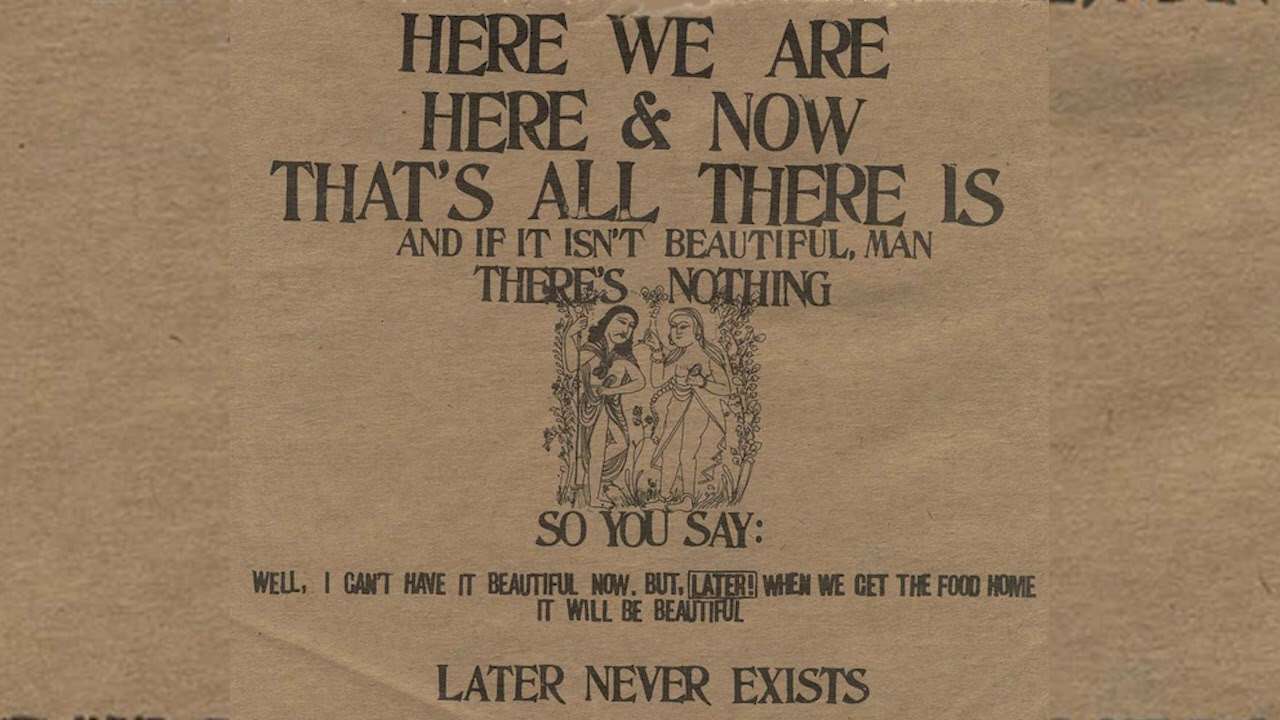



There is a strange attitude and feeling that one is not yet in real life. For the time being one is doing this or that, but whether it is a relationship or a job, it is not yet what is really wanted, and there is always the fantasy that sometime in the future the real thing will come about.
— Marie-Louise von Franz, The Problem of the Puer Aeternus (2000)
“Would” is the conditional tense. It describes things that depend on circumstances not yet in place. In ordinary language, that is useful. We need a way to speak about possibility. But the conditional can also become a posture toward life. It can turn from grammar into a strategy. I would make that amends, but I’m not ready yet. I would deal with that relationship, once things settle down. I would show up differently, after I feel more solid. The sentences sound responsible. They contain intention. But they also keep action suspended just out of reach.
Oliver Burkeman begins Four Thousand Weeks by questioning a familiar assumption: that one day everything will finally be under control. The workload will ease. The right partner will appear. The internal confusion will settle. Then we will relax. Then we will live. His point is not about productivity. It is about our relationship to time. When life is treated as something that properly begins only after certain conditions are met, the present becomes a waiting room. This is the Would-life. The life always about to start.
Burkeman calls this the “when-I-finally” mind. When I finally get organized, when I finally sort myself out, then I can begin the life I was meant to live. The person caught in this pattern often believes the problem is external—that they simply haven’t accomplished certain things yet. What makes it so durable is that even when the conditions improve, postponement continues. A new requirement takes the place of the old one. The issue was never the workload or the relationship. It was the assumption that life begins later.
Von Franz described a similar pattern psychologically in her study of what she called the puer aeternus, the “eternal youth.” She observed a tendency to live provisionally, with the sense that real life is still ahead. Beneath that attitude she saw a fear of being “pinned down,” of fully entering space and time as a specific, limited person. To commit to something is to accept exclusion of other possibilities. To act is to risk failure. The conditional keeps those risks at bay. As long as the real thing has not begun, the self remains protected.
Addiction is one form of deferred living, the belief that real experience will happen later, once something changes. Recovery brings attention back to the present, but the mind can rebuild its postponements in subtler ways. Once I complete more step work. Once I repair this relationship. Once I feel stronger in my recovery. The target shifts. The deferral remains.
Burkeman’s answer is not to try harder or plan better. It is to accept that the conditions will never align perfectly. There will always be unfinished business, unresolved emotion, competing demands. This is not a problem to solve. It means recognizing that this imperfect set of circumstances is the only place life ever occurs. The present is not a corridor to somewhere else. It is the location.
Where does “would” still appear in my thinking, and what condition is it waiting on?
What am I postponing in the name of readiness?
What would change if I accepted that this day, as it stands, is already real life?
What is one step I can take now, under present conditions, instead of waiting for better ones?