

Without a transition, a change is just a rearrangement of the furniture. Unless transition happens, the change won’t work, because it doesn’t take.
— William Bridges, Transitions: Making Sense of Life’s Changes (1980)
In his book Transitions, William Bridges explored why major changes in life often fail to produce the transformation people expect. Bridges began his career as a literature professor before turning his attention to the psychological experience of change, and his work focused less on the external events that alter a life and more on the internal process through which a person gradually reorganizes themselves around those events.
At the centre of the book is a distinction between two different processes that occur during periods of change. Change refers to the external event that alters the circumstances of a life: a new job, a move, the end of a relationship, the birth of a child, or the decision to stop a behaviour that has shaped our days. Transition refers to the internal process through which we gradually adjust to that altered reality, a psychological reorientation in which our assumptions, habits, and sense of identity reorganize themselves around the new circumstances. Because changes are visible and decisive, they are often treated as the entire transformation.
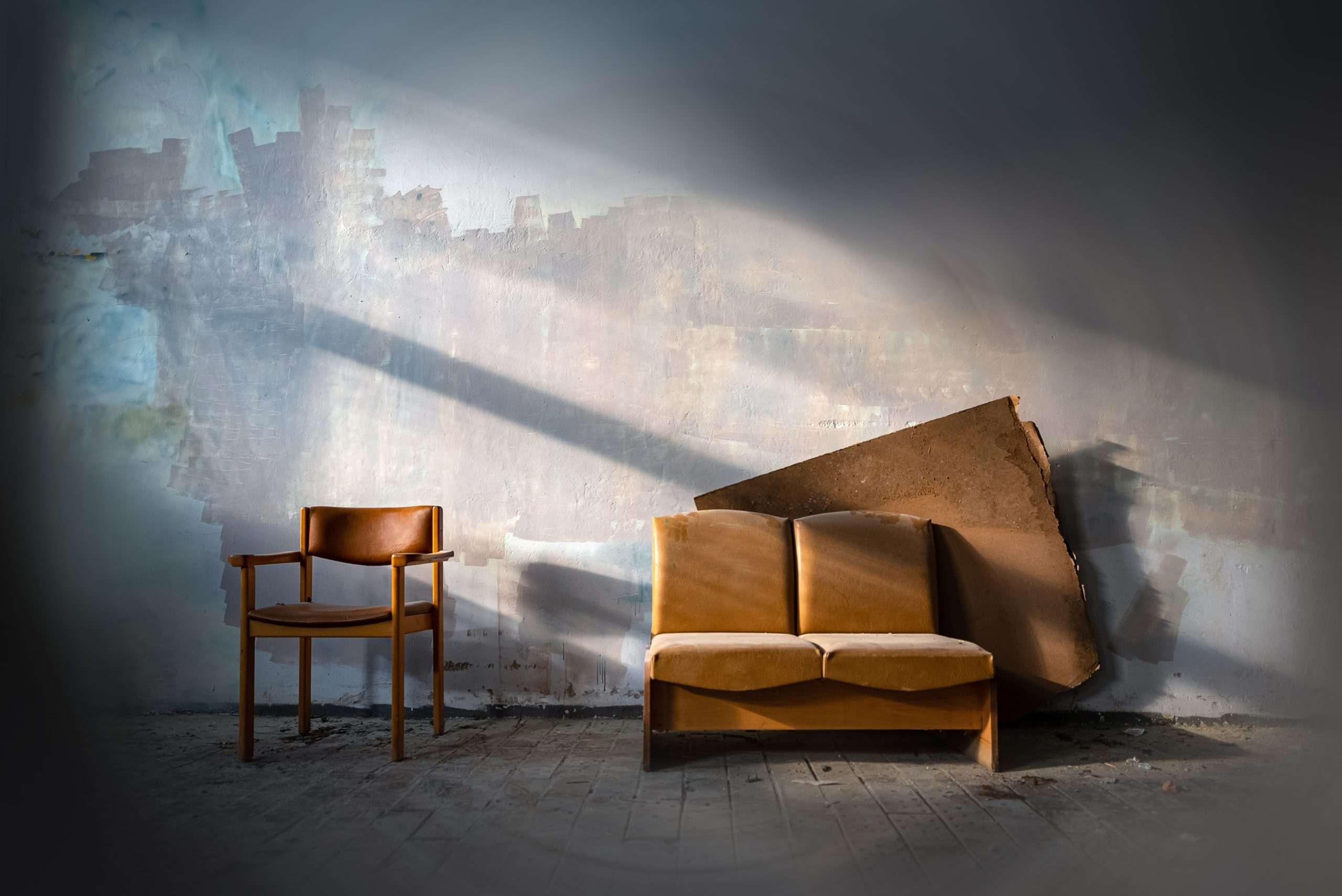
When the external change occurs but the internal transition has not yet taken place, the structure of life may look completely different while the deeper patterns that once organized it remain largely intact. We may enter new environments, adopt new routines, and present a different version of ourselves to the world while still interpreting events through the assumptions and emotional reflexes formed in the earlier life. The behaviour may stop, the surroundings may change, and the outward story may appear to have turned a corner, yet internally we continue to react according to the logic of the life we have left. In that situation the furniture moves, but we do not.
Many of us recognize this experience in recovery. The decision to stop may be immediate and decisive, and a behaviour that once dominated our lives can end in a single moment of clarity. From the outside the transformation appears obvious. Routines shift, environments change, and the visible signs of the earlier life disappear. Yet internally those same patterns can continue to shape how we respond to the present. Patterns formed over years remain active, and familiar ways of interpreting ourselves and others continue to operate, and situations that once triggered particular reactions can still produce them long after the behaviour itself has ended. The external change has occurred, but the inner structure that once supported that life is still present, gradually loosening as the deeper transition unfolds.
When this happens it can feel as though the change has not really taken hold. If the behaviour has stopped and the circumstances have shifted, we may expect the inner experience to transform just as quickly. When it does not, we may conclude that we have somehow failed to carry the change through to its conclusion.
Part of what makes this so disorienting is that we have almost no cultural preparation for it. Earlier societies built rituals around exactly this experience—rites of passage that named the in-between and made clear that the disorientation was normal. We have largely lost those structures. Without that framework, the inner lag feels like a personal failing rather than a recognized stage in a process everyone goes through. Fortunately for us, the fellowships and the Steps offer something close to that structure.
External change can happen quickly because it involves decisions and visible actions. The deeper reorganization of identity unfolds more slowly as the patterns that once structured our lives begin to loosen their hold. Roles that once defined us release their authority, assumptions that once guided our reactions become easier to question, and a different sense of self gradually takes shape. Over time the life that began with a moment of change becomes a life that can actually be inhabited.
What change in my life has already taken place while I’ve been waiting for the transformation to begin?
Where might I be living in a new room while arranging the furniture as if nothing had changed?
What habits or assumptions from an older version of myself still shape how I respond to the present?
What would it look like for me to begin living in the life that has already begun?